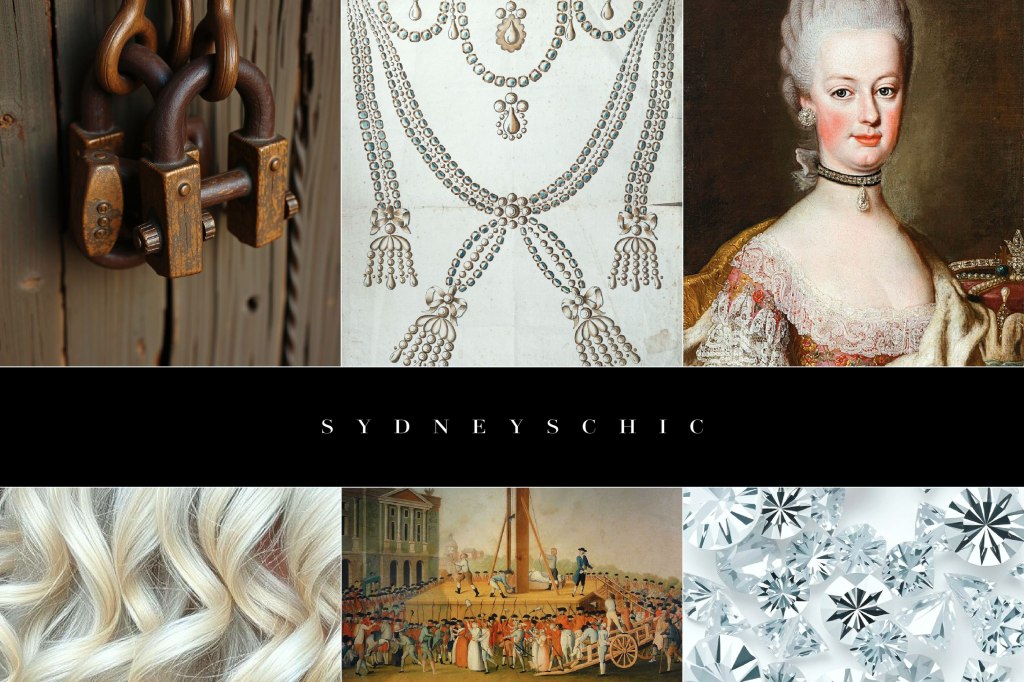

I’m excited to announce a brand new series here on the blog: “Crimes of Fashion.” Get ready to delve into the scandalous, the illegal, and the downright deadly side of style! Forget fleeting trends and runway shows; we’re digging deep to uncover the moments where fashion became fatally intertwined with crime, conspiracy, and maybe even murder—but I’m getting ahead of myself! I’m interested to explore this new perspective, peeling back the layers of silk and lace to reveal the secrets and scandals hidden beneath. Join me as we unravel the threads of history and uncover the “Crimes of Fashion!” Get ready, it’s going to be a wild ride.
This week for our first post, we’re kicking things off with a well known fashion icon: Marie Antoinette. While I do plan to devote a full post to her impact on style, today we’ll be specifically dissecting the infamous Affair of the Diamond Necklace—the missing diamonds, the elaborate deception, and the political machinations that arguably cost her head. This could have easily been another installment of my “Haute History” series, but with the undeniable surge in true crime content, I felt compelled to give this dark corner of fashion its own spotlight. Fashion could be a motive, a weapon, or an instrument of betrayal—I guess we’ll find out! Obvious trigger warnings apply for sensitive readers.
The Victim
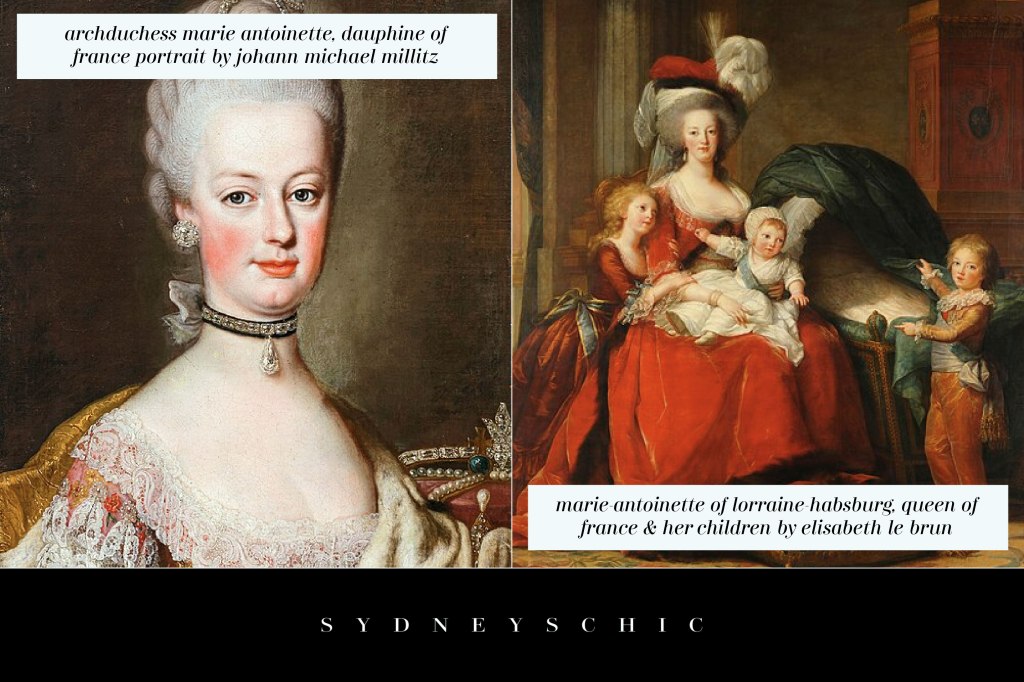
Marie Antoinette, Queen of France from 1774 to 1792 through her marriage to King Louis XVI, remains one of history’s most captivating and controversial figures. Born Maria Antonia Josepha Johanna, an Archduchess of Austria, her union with the French Dauphin was intended to solidify an alliance between the two powerful nations. Upon Louis XVI’s ascension to the throne, she became Queen—a position that thrust her into the heart of the burgeoning social and political unrest that would ultimately erupt into the bloody French Revolution.
While the monarchy enjoyed immense power and privilege, France faced growing economic hardship, widespread poverty, and a deeply entrenched system of inequality. Marie Antoinette, with her glittering court at Versailles, became a lightning rod for popular discontent. She was often depicted as embodying the perceived decadence and extravagance of the aristocracy, fueled by rumors of lavish spending, elaborate hairstyles, and a detachment from the struggles of the common people. The infamous, though likely apocryphal, phrase “Let them eat cake” became synonymous with her alleged indifference to the plight of the suffering masses.
However, the historical narrative surrounding Marie Antoinette is far more nuanced than the simplistic caricature often presented. Much of the negative perception of her was fueled by targeted political propaganda, aimed at discrediting the monarchy and fostering revolutionary fervor. The “libelles,” scandalous pamphlets circulating at the time, often exaggerated or fabricated stories to portray her as immoral, manipulative, and even treasonous—such was the case with the infamous diamond necklace she was alleged to have carelessly ordered while people starved in the streets of Paris.
The scene
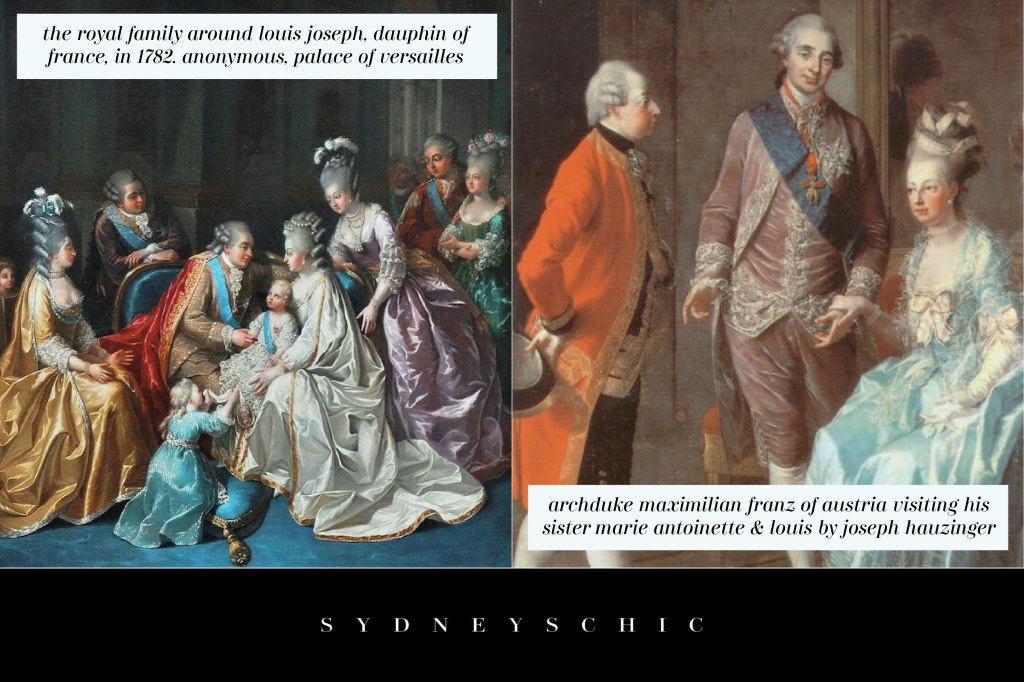
At the time of Marie Antoinette’s marriage to the Dauphin Louis in 1770, the relationship between Austria and France was undergoing a profound and historically significant transformation. For centuries, these two powerful European nations had been bitter rivals, locked in a near-constant state of conflict manifested in numerous wars, territorial disputes, and competing dynastic ambitions. This history of animosity had deeply ingrained suspicion and distrust within both societies.
However, the marriage of the young Austrian Archduchess to the future King of France was far more than a mere royal nuptial; it was a key component of a meticulously planned strategic alliance orchestrated by the astute Austrian Chancellor Wenzel Anton von Kaunitz. Kaunitz, recognizing the shifting power dynamics on the continent, spearheaded a radical re-alignment of European powers known as the Diplomatic Revolution of 1756. This diplomatic maneuver aimed to secure Austria against the burgeoning threat of Prussian expansionism under Frederick the Great. By severing Austria’s long-standing alliance with Great Britain and forging a new bond with its traditional enemy, France, Kaunitz sought to create a powerful continental bloc capable of containing Prussian ambitions.
The marriage of Marie Antoinette, a symbol of the Austrian Habsburg dynasty, into the heart of the French Bourbon monarchy was specifically designed to cement this fragile alliance. It was intended to foster closer political, economic, and cultural ties between the two nations, moving them beyond the old paradigm of rivalry towards a future of cooperation and mutual benefit. The union represented a deliberate effort to bury the hatchet of past animosities and forge a new era of Franco-Austrian understanding. While the marriage undoubtedly improved diplomatic relations and facilitated increased trade and cultural exchange, it’s important to note that lingering resentments and ingrained suspicions remained among certain factions within both societies. Many in France, wary of Austrian influence over their royal family, viewed Marie Antoinette with suspicion, while some in Austria questioned the long-term viability of an alliance built on such a historically turbulent relationship. The success of this alliance, therefore, remained a delicate balancing act, contingent on the continued political will of both nations and the ability to overcome deeply rooted historical prejudices.
The perpetrator
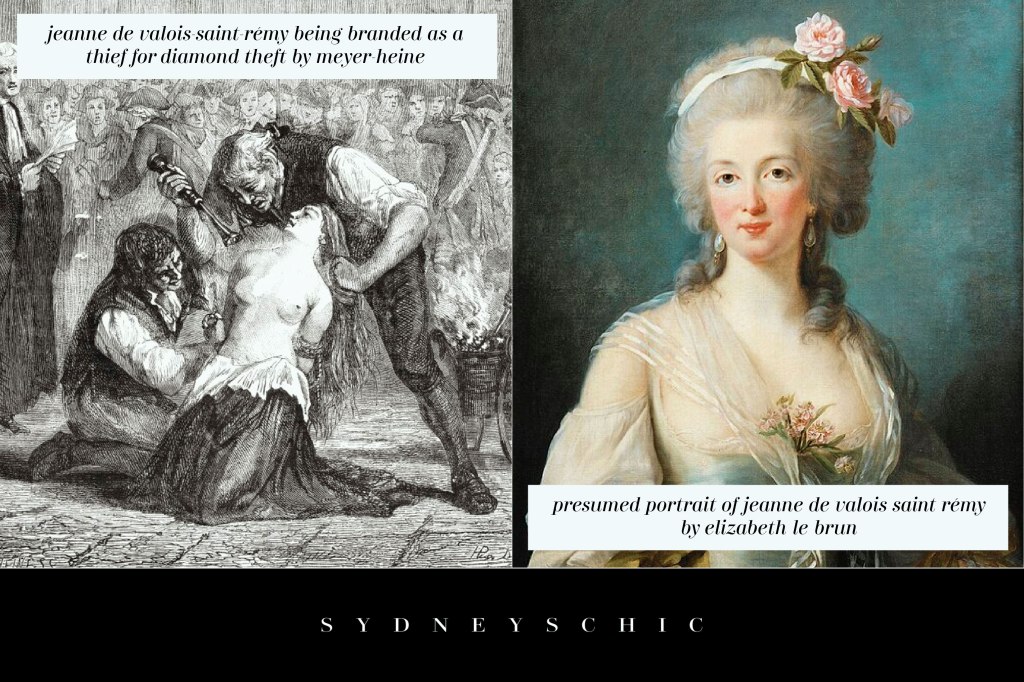
Jeanne de Valois-Saint-Rémy—more commonly known as Jeanne de la Motte—was a woman of audacious ambition and questionable morals who etched her name into the halls of French history as a central player in the Affair of the Diamond Necklace. This elaborate scam, unfolding in the turbulent years preceding the French Revolution, delivered a devastating blow to the already fragile reputation of the French monarchy, and in particular to Queen Marie Antoinette, further alienating the populace and accelerating the march toward revolution.
Born into a life of penury that belied her noble lineage, Jeanne was a direct descendant of the Valois dynasty, which had once held dominion over France. This incongruity—a noble bloodline juxtaposed with crushing poverty—fueled a burning desire within her to reclaim what she perceived as her rightful inheritance and elevate herself from the depths of obscurity. Jeanne’s ambition, however, was not tempered by ethical considerations. She possessed a sharp intellect and an uncanny ability to manipulate those around her, qualities she readily employed in her relentless pursuit of social and financial advancement.
Driven by her insatiable hunger for wealth and status, Jeanne’s scheming fanned the perceived corruption and decadence of the ruling elite, further eroding public trust in the monarchy and contributing significantly to the growing revolutionary sentiment that would soon erupt and fundamentally transform French society forever. In essence, Jeanne de la Motte, driven by personal greed and a distorted sense of entitlement, inadvertently played a crucial role in setting the stage for the French Revolution—a revolution that would ultimately dismantle the very system she so desperately sought to infiltrate.
The crime
The Affair of the Diamond Necklace—a convoluted and sensational drama that unfolded in 1780s France—proved to be far more than a mere scandal; it was a pivotal event that irrevocably tarnished the image of Queen Marie Antoinette and, by extension, the entire French monarchy with far reaching consequences for Austria as well. While the Queen was likely not directly involved in the fraudulent scheme, the affair became inextricably linked to her reputation, bolstering pre existing resentment and mistrust that had already been sewn into the hearts of her subjects.
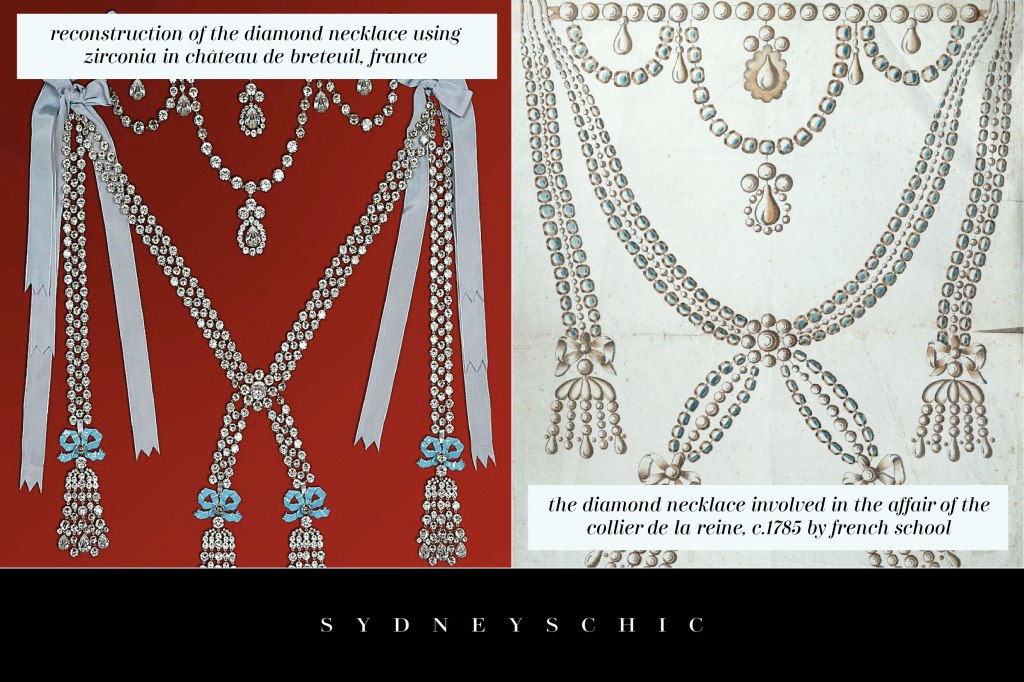
At the heart of the scandal lay a breathtakingly expensive diamond necklace originally commissioned by Louis XV for his mistress, Madame du Barry. This exquisite piece of jewelry—a symbol of royal extravagance—became a pawn in a far more sinister game. Jeanne de Valois-Saint-Rémy, a cunning and ambitious con artist with aristocratic lineage and a talent for deception set her sights on acquiring the diamonds with little care to consequence. Jeanne cleverly exploited the deep seated insecurities and ambitions of Cardinal de Rohan, a high ranking cleric desperately seeking to regain the Queen’s favor after falling out of grace.
Jeanne skillfully manipulated Rohan into believing she was acting as a secret intermediary for Marie Antoinette. She fabricated letters and held clandestine meetings, leading the Cardinal to believe the Queen secretly desired the necklace but could not openly purchase it due to political considerations and the King’s frugal attitude. Blinded by vanity and the allure of having royal favor returned to him, Rohan fell completely for the ruse. He purchased the necklace on credit from the jewelers and, under Jeanne’s direction, handed it over, convinced it would soon adorn the happy Queen’s neck. The deception, however, was short lived. As the jewelers became concerned about delayed payments, the truth began to unravel. The exposure of the fraud sent shockwaves through French society, leading to the arrest and public trial of the key players, including Jeanne de Valois-Saint-Rémy and Cardinal de Rohan. The sensationalist press seized upon the scandal, fueling public outrage with lurid details and exaggerated accusations.
The aftermath
While the trial ultimately exonerated Marie Antoinette from direct involvement, the damage was already done. The Affair of the Diamond Necklace became a potent symbol of royal extravagance, decadence, and perceived corruption. It amplified existing grievances against the monarchy, feeding into the growing atmosphere of discontent and resentment among the emaciated French. More than just a tale of deception and illicit deals, the affair served as a catalyst, accelerating the erosion of public trust in the royal family and contributing significantly to the volatile social and political climate that would lead to the French Revolution and ultimately, Marie’s death.
The whispers and accusations surrounding the diamond necklace lingered long after the trial had concluded, further poisoning the reputation of the Queen and her family, ultimately paving the way for their downfall. Marie, who was already seen as an outsider among the French because of her Austrian origin, was easy for Jeanne to frame and she never stood a chance in the court of public opinion that was growing increasingly violent with each day their demands went unanswered. Though she was proven innocent in the affair of the diamond necklace, many of Marie’s contemporaries continued to blame her luxurious life style for draining her husband’s coffers and getting her family overthrown. She tried and failed to escape France twice before being imprisoned by the revolutionaries for about a year while she waited for her mock trial and sentence.
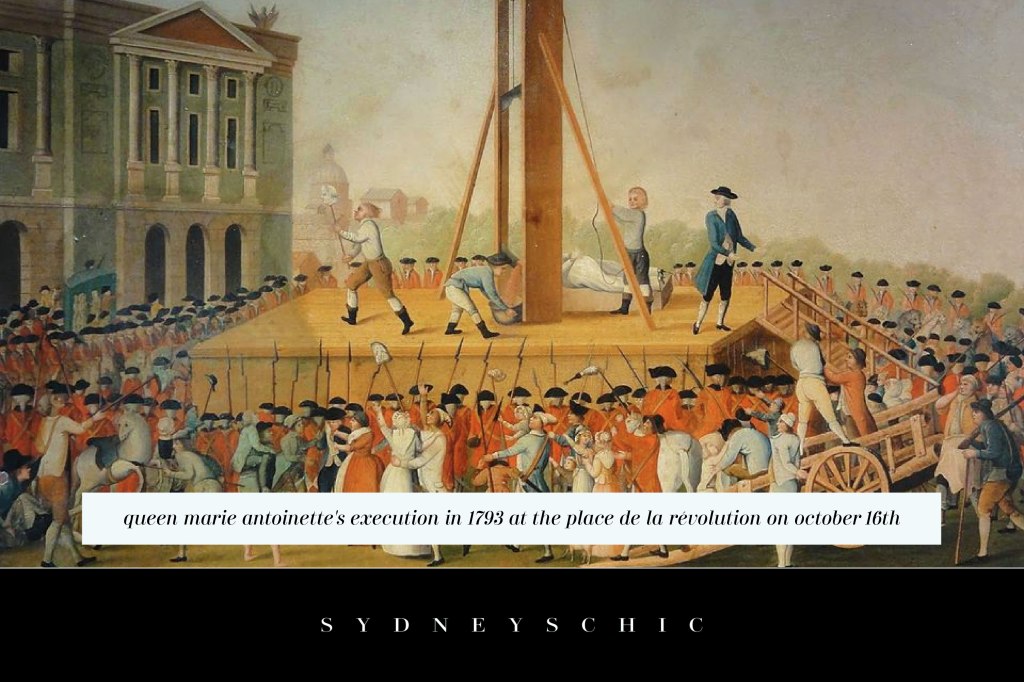
The execution of Marie Antoinette on October 16, 1793, marked a pivotal and gruesome moment in the French Revolution. Stripped of her royal status and referred to simply as “Widow Capet,” she was subjected to a humiliating show trial before being found guilty of treason and other charges. Her journey to the Place de la Révolution, in an open cart, was a spectacle of public scorn, highlighting the deep seated hatred towards the monarchy. With a chilling finality, the guillotine brought an end to her life, severing the last powerful link to the Ancien Régime and solidifying the revolution’s radical path. The death of Marie Antoinette not only symbolized the end of an era but also served as a stark warning to other European monarchies, fueling fears of revolutionary fervor spreading across the continent.
Last Call
Well, there you go! I think this was a dazzling start to this new series. I’m interested to know if this is a topic you’d like to see explored further in future Crimes of Fashion posts. Honestly, even though we’ve all pretty much heard the simplified version—that Marie Antoinette’s expensive tastes and lavish spending ultimately led to her tragic end at the guillotine—the idea that something as seemingly innocuous as a piece of jewelry, and one she never even ordered—mind you—could contribute, even tangentially, to such a horrible fate is still absolutely baffling to me. It really underscores how powerful appearances and perceptions can be, and how easily they can be manipulated.
Though we’re often warned about judging others based on their appearance, it’s an instinctive part of our human nature to do so and this is particularly true of high profile individuals such as Marie. I don’t agree with everything she or her husband did during their reign but at the end of the day, Marie was raised to be the sparkling queen of one of the most magnificent courts in the world which obviously impacted how she wanted to be seen. She was hated for how she presented herself but she couldn’t present herself any other way because to do so would be to not only undermine her husband but her country. In her view, she had to have the best as a living representative of France. As I said, we’ll talk more about her another time but I just wanted to point out that she’s much more complex than the spoiled rich girl she’s made out to be by history.

make sure you subscribe & follow to be notified of new content
©sydneyschic ┊image credit: sydneyschic ┊unsponsored post
Additional sources for the images used in my post:
Archduchess Marie Antoinette, Dauphine of France portrait by Johann Michael Millitz in 1770 via wiki commons on the left side.
Marie-Antoinette de Lorraine-Habsbourg, Queen of France, and her children by Élisabeth Louise Vigée Le Brun via wiki commons on the right side.
The royal family around Louis Joseph, Dauphin of France, palace of Versailles in 1782 via anonymous on the left side.
Archduke Maximilian Franz of Austria visiting his sister Queen Marie Antoinette and her husband, Louis by Joseph Hauzinger via wiki commons on the right side.
Jeanne de Valois Saint Rémy being branded for theft. Engraved by Meyer-Heine after Hippolyte de la Charlerie via wiki commons on the left side.
Presumed portrait of Jeanne de Valois Saint Rémy by Élisabeth Louise Vigée Le Brun via wiki commons on the right side.
Reconstruction of the diamond necklace using zirconia in Château de Breteuil, France via wiki commons on the left side.
The diamond necklace involved in the affair of the Collier de La Reine, c.1785 by French School on the right side.
Marie Antoinette’s execution in 1793 at the Place de la Révolution via wiki commons in the single image.





 Sydney's Chic.
Tell me what you think!