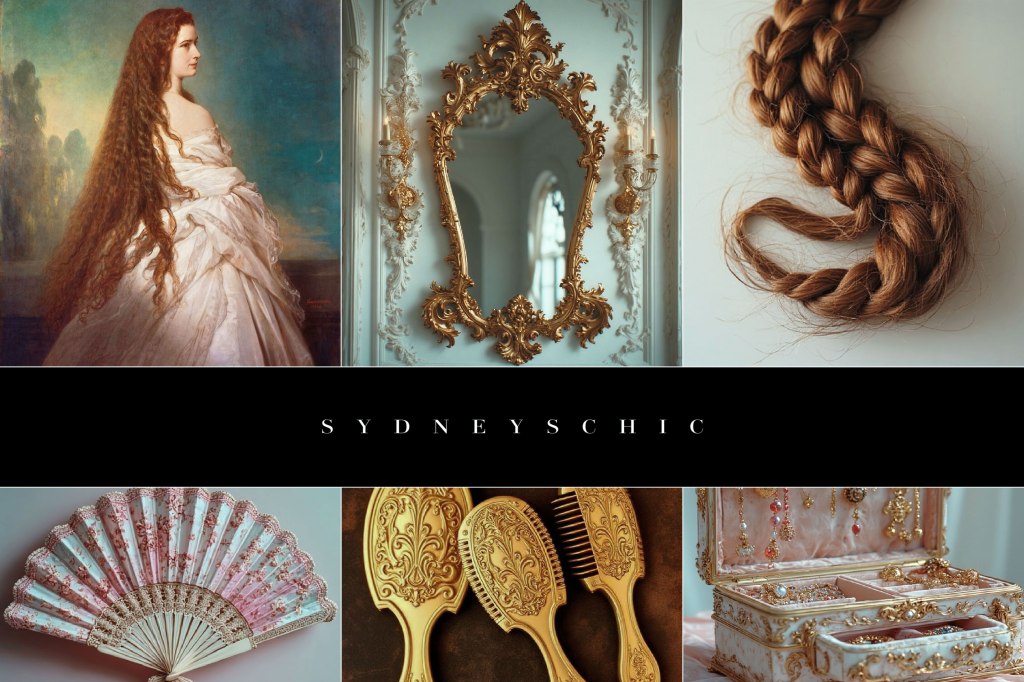

It’s time for another Haute History post and with Valentine’s Day approaching, I thought I’d choose someone special whose world renowned beauty brought her love and tragedy in a story so intruiging it could’ve been written by Shakespeare himself. As an avid history lover, I was surprised to not learn about Empress Elisabeth “Sisi” of Austria sooner. However, when I discovered her story, I was immediately captivated. She is not as popular as other queens of history such as Marie Antoinette or Elizabeth I but in my opinion, she should be.
While Elisabeth’s reputation in her role as an empress is highly debatable—either you love her or you hate her—there’s no denying the significance of her life both in politics and in fashion. She was a beauty icon of her age that influenced the aesthetics of her home country and far beyond. Sisi deserves more than a mention, she’s getting a whole spotlight. Keep on reading to uncover the good, the bad, and the fashion.
Before I go any further, I’d like to point out that the focus of this post will be on Sisi, herself, as well as her lasting style legacy. I understand that she had many complex relationships and life events that are often explored broader in other work about her and I encourage you to do your own research if you want to know more. Please be warned of sensitive and dark subject matter ahead. If you are easily affected by this kind of content, I kindly suggest that you to check out one of my more light hearted posts—like the one about shoes—and I’ll see you next time!
Early Life
Empress Elisabeth of Austria, known affectionately as “Sisi,” was born on December 24, 1837, in Munich, Bavaria, into a prominent royal family. As the youngest daughter of Duke Maximilian Joseph in Bavaria and Duchess Ludovika, she was part of the Wittelsbach dynasty, a lineage rich in European nobility. King Ludwig II of Bavaria, known as the swan king, and famous for his eccentric building of Germany’s most extravagant castles like Neuschwanstein was her maternal first cousin. They would remain close throughout their lives and both share eerily similar fates.
Sisi’s early years were marked by rigorous education and strict discipline under her mother’s guidance, who instilled in her a mastery of languages, literature, and the arts, alongside a deep appreciation for physical fitness. Renowned for her beauty, vitality, and grace, Sisi excelled in horseback riding, dancing, and sports, setting her apart as a spirited and independent figure. Even at a young age, she drew attention with her rebellious nature in rigid aristocracy.
Her idyllic Bavarian upbringing contrasted with the formalities of the Habsburg court she would later join; at just 15, she was betrothed to Archduke Franz Joseph I of Austria, a union arranged to strengthen political ties. This was despite the fact that the archduke was actually supposed to marry Sisi’s older sister, Duchess Helene of Bavaria. Bewitched by her beauty, he fell in love with Elisabeth at first sight and chose her as his bride instead, much to the dismay of those involved in the previous marriage arrangements. This included the Archduke’s mother, Archduchess Sophie.
The marriage, which took place in 1854 when Sisi was 16, thrust her into the demanding role of Empress of Austria, a transition that followed a childhood defined by artistic grace and a free-spirited Bavarian heritage. It was this culture clash that would lead to a life time of difficulties at court. The eventual estrangement from her family and a gilded life she felt stifled by would set her apart from other female monarchs, making her a deeply complex and misunderstood heroine of history.
Gilded Cage
Empress Sisi, reigned during a transformative era for the Austro-Hungarian Empire, marked by political complexity, cultural flourishing, and personal turmoil. Her marriage to Emperor Franz Joseph I was a union of duty rather than affection. While the couple remained respectful of each other, it was clear that the Emperor’s infatuation with his wife was lasting while Sisi found her husband and life at court to be suffocating. For this reason, she would flee Vienna whenever the opportunity presented itself, preferring life as a world traveler than an empress.
Sisi’s reign spanned the mid-19th century, a period when the empire grappled with rising nationalism, territorial losses, and the Austro-Hungarian Compromise of 1867, which restructured the monarchy into a dual empire with Hungary. Though often portrayed as a figure of aristocratic glamour—renowned for her beauty, love of dance, and equestrian pursuits—Sisi wielded subtle political influence, advocating for cultural patronage and modernization while resisting the rigid formalities of court life.
While she was beloved by the people as a style icon that reached far beyond Austria, she was not as popular as an empress as she was as a public figure. She was applauded for her free spirit and support of Hungary’s autonomy yet also seen as selfish, impractical, and neglectful of her royal duties. It was fair to say that she was most revered by the public while Viennese courtiers were less than pleased by her controversial parenting and constant globe trotting.
Her personal tragedies, including the suspicious death of her first cousin King Ludwig II in 1886 and the murder-suicide of her son, Crown Prince Rudolf in the Mayerling incident of 1889 underscored the fragility of the Habsburg legacy. These events also took a severe toll on Sisi’s mental health which saw a drastic decline from her usual eccentricity. Devastated by loss, she became a recluse that traveled even more restlessly than she had before.
Sisi would live the rest of her days in grief, refusing to even see her son’s body. She only wore black and hid her face behind a mourning mask at public events. Her loss became so unbearable that she wished for death and prayed to be forgotten. This wish would be realized upon her own assassination in 1898 by an anarchist, though she would never truly be forgotten. Sisi’s enigmatic persona and resistance to convention left a lasting imprint on Austria’s cultural memory, symbolizing both the grandeur and the fragility of an empire in decline.
Beauty Queen
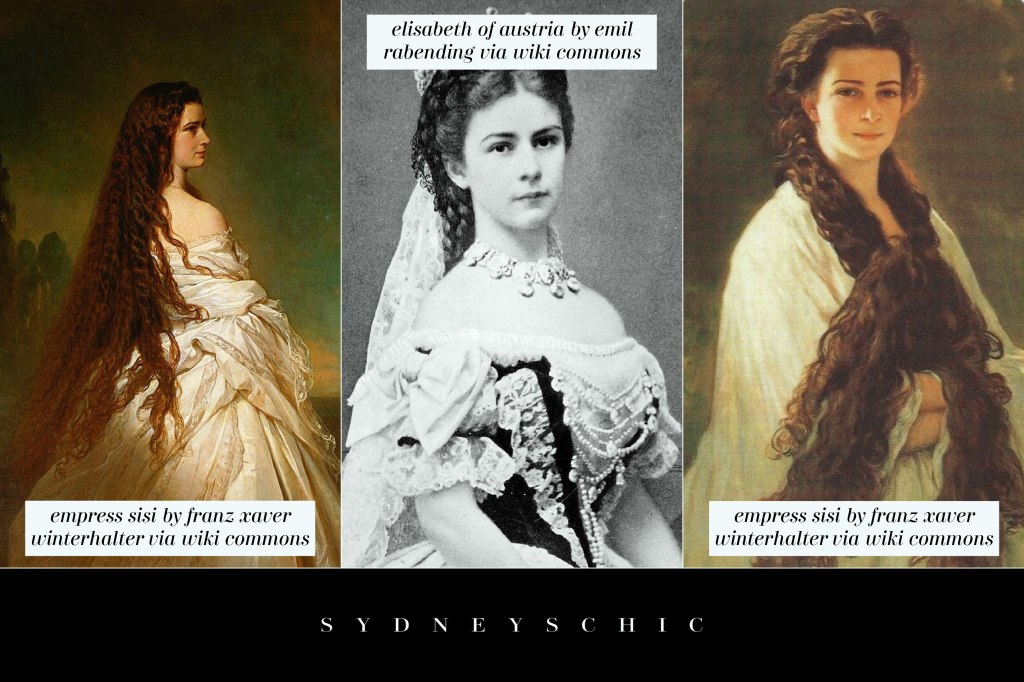
Elisabeth of Austria was celebrated as one of the most beautiful women of the 19th century, her ethereal presence capturing the imagination of her era. With her cascading golden hair of youth that would slowly grow into rich chestnut, warm eyes, and willowy frame—heightened by a habit of wearing flat shoes to appear taller—she embodied an almost mythic ideal of grace and elegance. Though legend has given her blue eyes, the majority of historical accounts and paintings indicate that they were hazel or brown.
Her allure was not merely physical; it was amplified by her poise, a sharp intellect, and a romantic mystique that contrasted with the very essence of monarchy. It wasn’t just how she looked, it was that how her attractiveness blended and danced with her withdrawn character. Yet, her beauty became both a crown and a cage. Afterall, it was her angelic face that had stolen Franz Joseph away from her sister and sealed her fate as consort to a fading empire.
The relentless scrutiny of courtiers, artists, and admirers weighed heavily on Sisi, fueling a lifelong obsession with youth and a nomadic lifestyle to escape the constraints of imperial duty as well as the age that she couldn’t stave off forever. Notorious for her home beauty remedies to maintain her splendor, Elisabeth stopped allowing herself to be photographed after the age of 32 so as not to show her age. Wanting to be remembered as the beauty she once was, her last official photograph was taken when she was 30 years old. Ten years later at 40 years old, she would refuse to sit for painted portraits as well.
The sadness of her life later eroded her once unshakeable composure, giving way to a gaunt, wary figure clad in black. Becoming a shadow of her former self, she hid from photographers behind fans, parasols, and veils. Still, Sisi’s legend endures—not just as a symbol of aristocratic magnificence, but as a poignant reminder of the burdens of fame, the fragility of beauty, and the human cost of a life lived under relentless admiration.
Modern Influence
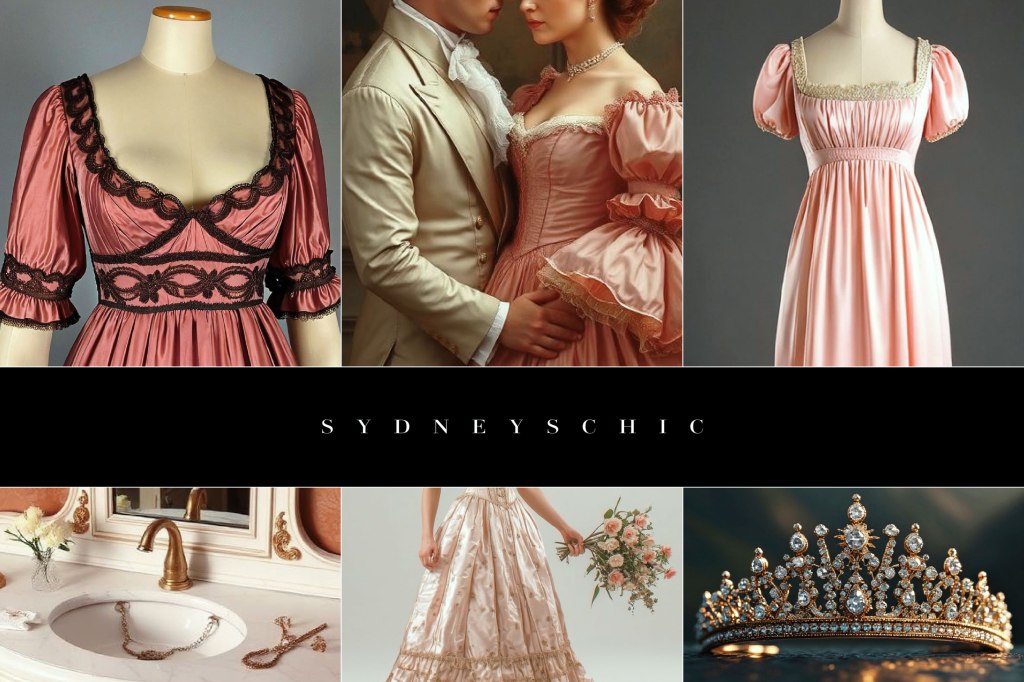
Elisabeth endures as a paradoxical icon whose nineteenth‑century obsession with slender silhouettes, long cascading hair and meticulously hand‑stitched gowns continues to ripple through today’s fashion and beauty cultures. Designers from Alexander McQueen to Dior periodically resurrect her austere yet romantic aesthetic, translating her famed style of tightly cinched waists, low‑cut bodices and richly embroidered fabrics into modern runway reinterpretations that celebrate both historical opulence and contemporary minimalism. Her penchant for flowing gowns, soft pastel hues, and ornate accessories like tiaras and lace collars in her youth has been revisited by designers such as John Galliano and Karl Lagerfeld, who’ve drawn on her regal yet ethereal visage.
The empress’s legendary beauty rituals—her strict diet, rigorous exercise, and devotion to natural, luminous skin—have become touchstones for today’s wellness‑driven beauty industry, inspiring everything from luxury skincare lines that market “imperial glow” to social‑media influencers who echo her disciplined self‑care ethos. Sisi’s dedication to maintain her natural beauty throughout her life is also a sentiment shared by contemporary women of today. The preservation and promotion of what she considered her most beautiful attributes is also a lesson in self love and appreciation for the traits that make us unique. Sisi remains a natural beauty icon who reminds us to embrace our own god given loveliness.
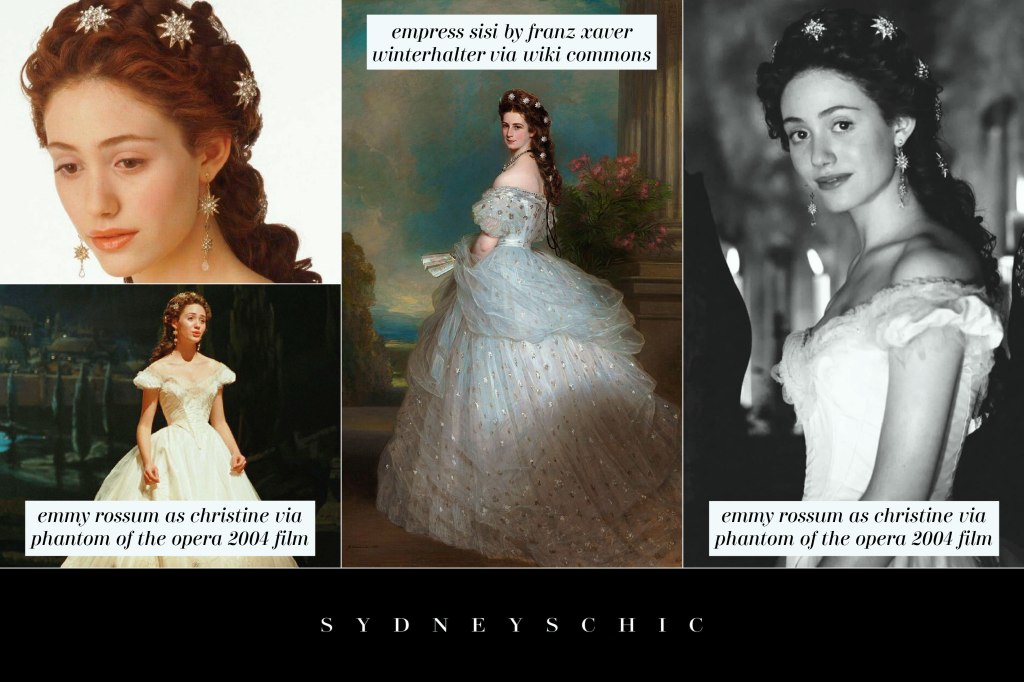
Sisi’s legacy is also enshrined in popular culture, notably the 1950s Sissi films, which romanticized her look and cemented a template for high fashion’s enduring fascination with romantic, aristocratic elegance. In the 2004 movie Phantom of the Opera, actress Emmy Rossum, wore a pale blue gown and starburst hair style inspired by one of Sisi’s most famous paintings by Franz Xaver Winterhalter, as Christine Daaé, in the “Think of Me” scenes. This not only revived enduring interest in Sisi but in her fashion sense as well. She is not merely a long bygone relic of Habsburg elegance but as a perpetual muse whose standards of poise, self‑discipline, and sartorial daring—both in her style and beyond—continue to shape and challenge modern conceptions of feminine allure.
Final Thoughts
Though she is not among the most popular or widely recognized female monarchs, Elisabeth of Austria is no less important to the pages of history. Sisi’s legacy endures over a century after her tragic death, celebrated not just for soft political power but for her enduring affect on beauty standards, fashion, and popular culture. She championed a natural approach to beauty only a few decades before cosmetics would become normalized in the west making her one of the last faces of Victorian simplicity.
In her life, Sisi set trends across Europe and she continues to inspire the greatest fashion houses of today with her many portraits and photographs. Every time a Victorian revival collection makes headlines walking the runway behind a major label, it’s an homage to the tragically fallen empress. Remember Elisabeth when you drape yourself in cascading fabrics, celestial accessories, soft silhouettes, milky pearls, or long braids. Afterall, it was the way that she wanted to be remembered most—through the beauty she safeguarded in life so well.

make sure you subscribe & follow to be notified of new content
©sydneyschic ┊image credit: sydneyschic ┊unsponsored post







 Sydney's Chic.
Tell me what you think!