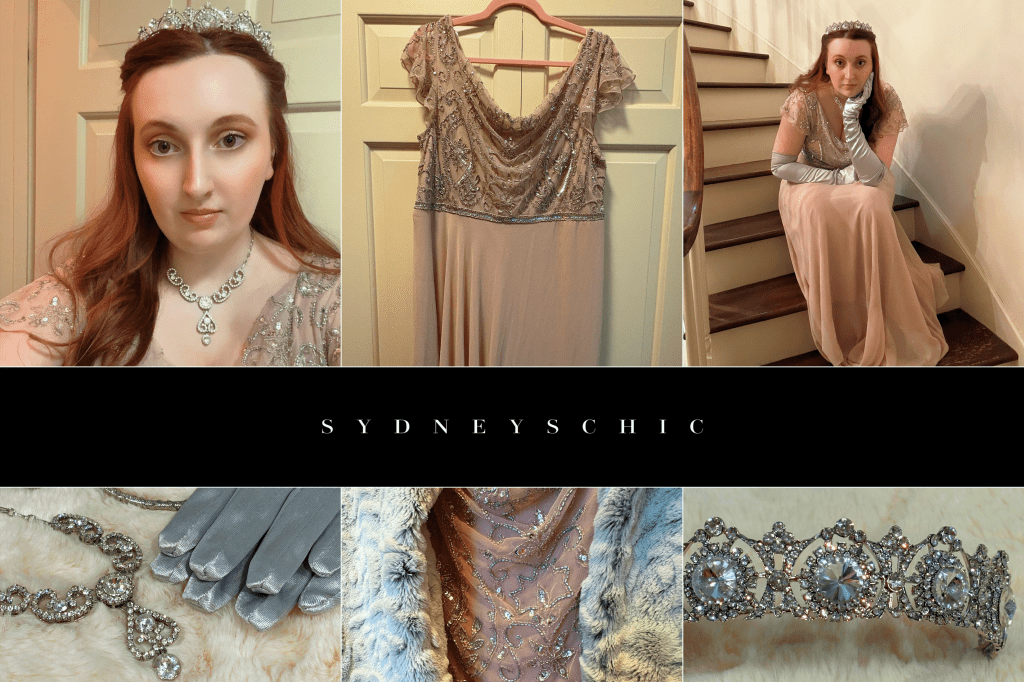

Last week, we took a deep dive into the elegance and romance of Regency fashion— from flowing empire waist gowns and delicate gloves to heirloom worthy pearls and intricately styled curls. We talked about the history of the period’s style choices as well as some of the big names that made it popular. Talking through each outfit staple with care, we discovered why this trend endures. With all of that inspiration fresh in mind, I couldn’t wait to bring it all to life for this week’s post, where I’m sharing exactly how I styled the perfect outfit for a Bridgerton Ball!
Attending a ball inspired by the world of Bridgerton calls for drama, refinement, and just a touch of whimsy. Think soft fabrics that float as you move, pastel hues worthy of the ton, and accessories that sparkle under candlelight. I’ll walk you through every detail of my ensemble—from the silhouette I chose and why, to the accessories, colors, and finishing touches that made the look feel authentically Regency while still reflecting my personal style.
Of course, no Bridgerton-inspired look is complete without thoughtful styling. I’ll also be sharing how I approached hair and makeup to capture that romantic, ethereal glow, along with the shoes and jewelry that tied everything together. Whether you’re planning to attend a themed ball, host a watch party, or simply indulge your inner duchess, there’s plenty of inspiration to borrow. No matter if you lean toward Daphne’s soft sophistication or prefer a bolder, scene-stealing statement, you’ll find ideas to help you create a look worthy of Lady Whistledown’s approval. So grab your dance card and prepare to step into the glittering world of the ton—it’s time to waltz into the Bridgerton Ball in unforgettable style.
Inspiration
When I set out to craft a Regency era ensemble for the upcoming ball, the first idea that seemed both elegant and daring was a soft gray gown modeled after a portrait of Empress Josephine, her poised silhouette and delicate pearls whispering of imperial grace. I was going to lean hard into the roman laurels and everything! Yet the moment the satin fell over my shoulders, the dress clung in the wrong places, the drape sliding off my hips and the bodice feeling more constrictive than flattering; the very silhouette that once promised a nod to Napoleon’s beloved now felt like a misstep that betrayed the era’s careful effortlessness.
The disappointment was immediate—a sigh that lingered, a feeling of having wasted precious fabric and time on a concept that simply did not translate from canvas to skin. With the gray dress set aside, I found myself standing at a crossroads, unsure which direction would lead to a cohesive look that could fit the aesthetic in my mind, balancing the delicate pastel palettes of the period with the structural elegance of empire waistlines, while still honoring the romantic ideal of a ball‑worthy Regency silhouette.
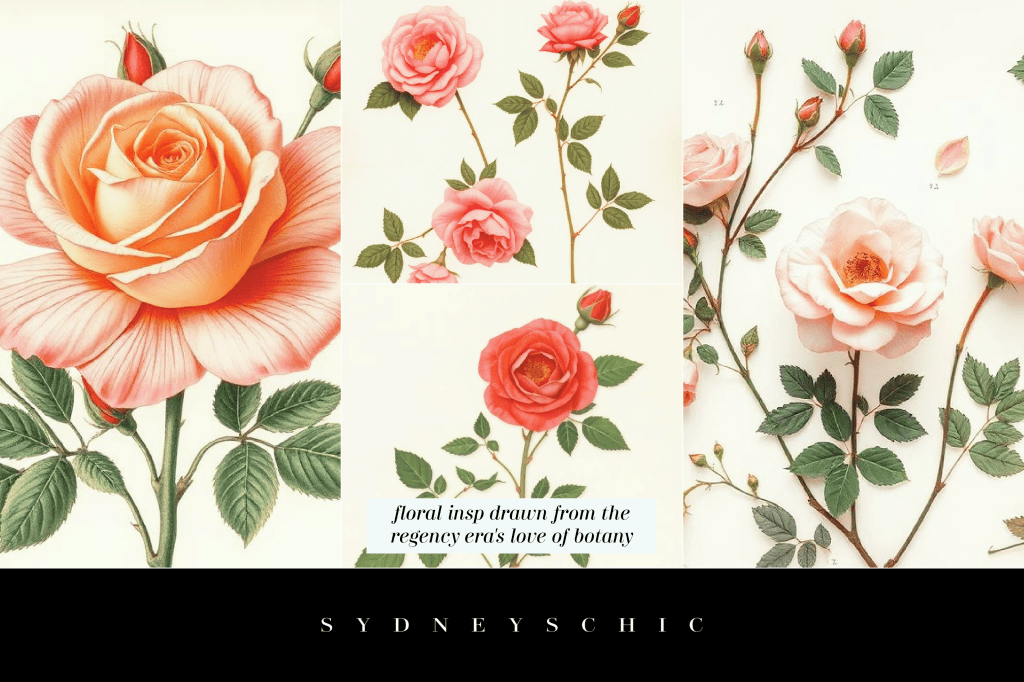
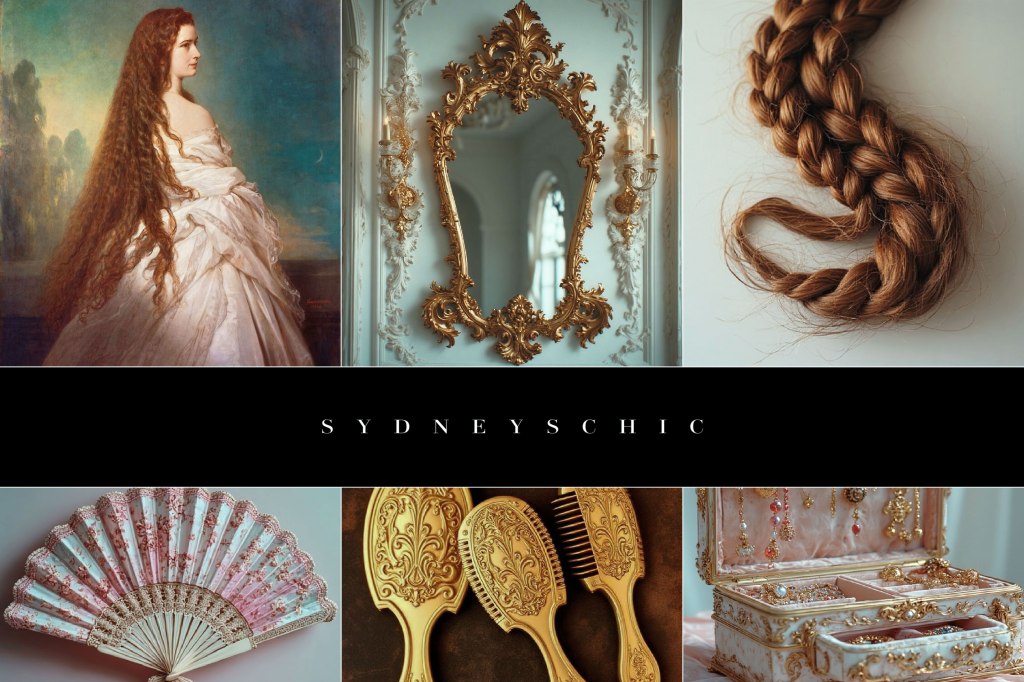
It was then that I remembered Georgian’s fascination of botany. In fact, they loved it so much that this time was also called “botanomania”. Society took a great interest in both the science and art of floristry. This obsession was fueled by new plant discoveries from around the globe, advances in horticulture, and the romanticization of nature especially in relation to courtships and stately homes. Botany became a socially acceptable genteel hobby of women who were often limited in the sciences they were encouraged to study. This was the perfect inspiration!
Building on my already existing love of botany and gardening myself, I sought to craft a look inspired by flowers. I would include floral details everywhere I could from fabric to jewelry and I’d showcase these natural beauties as they would’ve done during the regency. I didn’t rigidly have a specific flower in mind to emulate but I was hoping to find rose accessories in a shade of dusty or pale pink. Thankfully, that was exactly what I got!
The dress
When choosing a dress to wear, I briefly considered buying a full Regency style costume. However, many of the options I found looked inexpensive and potentially poorly fitted. Since the defining feature of a Regency gown is really its silhouette, I decided it would be better to find a dress on my own that captured that shape while using higher quality materials. In my experience, costumes can sometimes be more historically accurate in design, but the fabrics and garment construction often look cheap, which can undermine the entire outfit. Having run into that issue before, I was eager to avoid it again.
Instead of risking a disappointing costume purchase, I searched for terms like “empire waist gown” and “short sleeve gown” on eBay. Ebay has never let me down and there was no reason to believe it would leave me disappointed for this task! Depending on your preferences, you could also try searches such as “vintage prom dress,” “vintage empire waist dress,” or even “Y2K prom dress.” The key is focusing on the silhouette rather than the label. As we mentioned in our last post about Regency fashion staples, the Y2k fashion of the early 2000’s drew heavy inspiration from this particular era. This means that with the overlap in aesthetic, there’s plenty of dresses both old and new for you to choose from if you know which decades to check.
If you’re browsing vintage pieces, keep in mind that vintage sizing is very different from modern sizing. I always recommend checking the listed measurements before buying anything online, but this is especially important for vintage garments. It’s also wise to read the full description carefully to see whether any alterations have been made. I came across several beautiful vintage gowns that would have fit the Bridgerton aesthetic perfectly, but they ultimately weren’t what I was looking for, so I continued my search.
After a fair amount of browsing, clicking through listings, and refining my searches, I eventually discovered a few brands (Ever Pretty, J Kara, and Balticborn) that consistently offered gowns that fit the silhouette needed for Regency-inspired attire—perfect for something like a Bridgerton style ball. Many of these dresses feature the classic empire waistline, cap sleeves, and long skirt that define Regency fashion, which means they naturally capture the right look without being marketed as such. What made these finds particularly exciting is that they were designed as formal evening wear rather than costume pieces. Because of that, the quality tends to be significantly higher. Instead of thin, shiny synthetic fabrics that can look inexpensive under lighting, these gowns are often made from heavier satins, chiffons, silks, or layered fabrics that drape beautifully and move gracefully. The construction is also typically more thoughtful, with better lining, structure, and finishing details.
Another advantage of looking at eveningwear brands is the overall fit. Since these dresses were originally made to be worn to formal events like proms, galas, or weddings, they’re designed to flatter the body and hold their shape throughout an evening of movement and dancing. That alone can make a dramatic difference compared to many ready-made costumes. By focusing on silhouette and quality rather than strictly searching for “Regency costume,” I found that it was actually much easier to locate gowns that felt elegant, well-made, and appropriate for the event—without sacrificing comfort or style. The result is an outfit that captures the spirit of the Regency era while still looking polished and authentic in a modern setting.
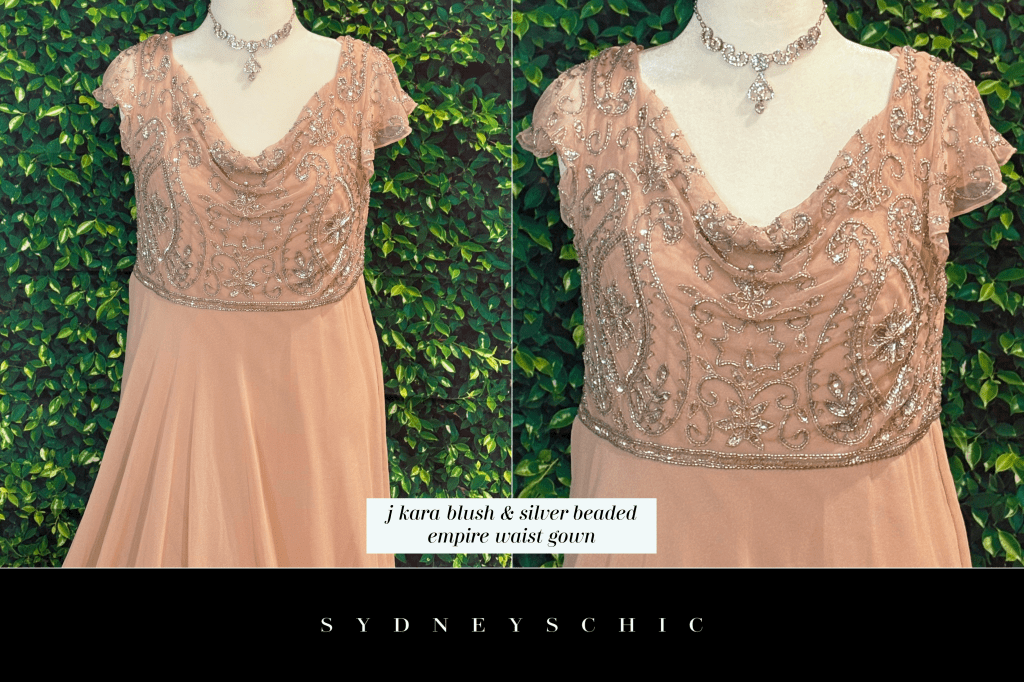
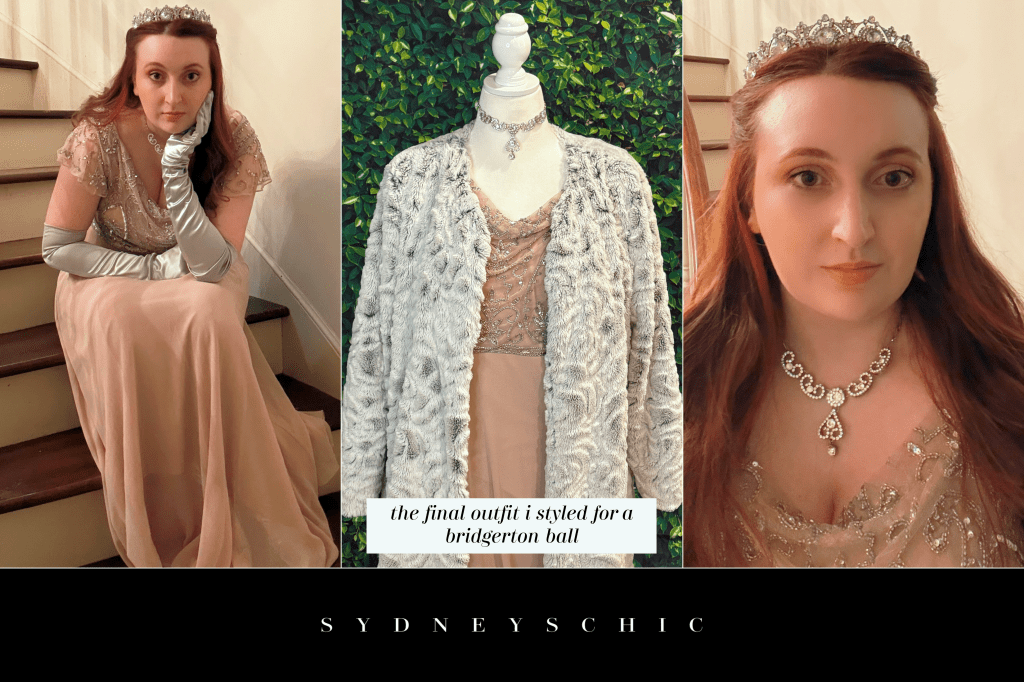
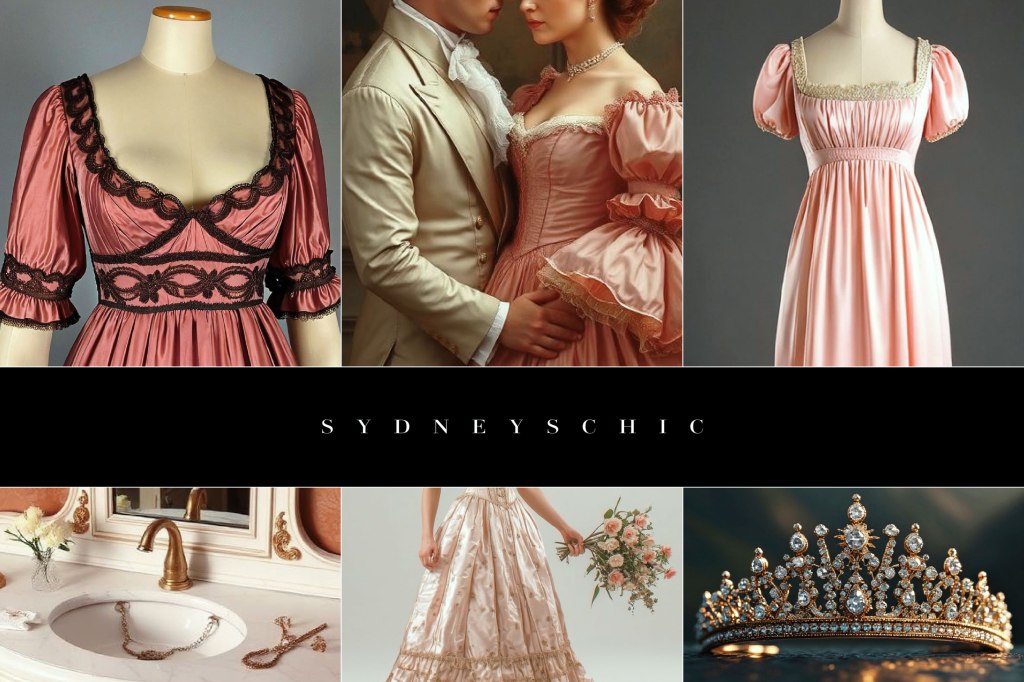
The dress I settled on is an empire waist short sleeve dusty rose colored gown from J Kara. The silver beading is intricate and reminiscent of the regency while the muted pastel color also meet a traditional Georgian palette. The neckline was cowled like Greco Roman gowns and not completely round which also lent to the antiquity inspiration behind the entire aesthetic. What I liked about this dress is that while it was very obviously Regency, it was also more Greco Roman than other dress options meaning that it fit both the original and the later inspired style. Not only was I wearing the trend, I was wearing the trend that started the trend!
Jewelry
When I’m gloved, my jewelry strategy collapses to a single, purposeful piece—usually a necklace or a brooch—because I need to be able to peel off my gloves in an instant for a quick photo. Any extra rings or bracelets would not only snag on the fabric but also force me to wrestle with multiple accessories before I could get the shot, turning a simple pose into a clumsy ritual. It’s also worth noting that my ears are not pierced or I would probably wear earrings as well if you were wondering why I left them out above.
Consequently, the necklace I choose must carry the full weight of my aesthetic statement, acting as the lone flash of style that bridges the gap left by the missing hand wear. I always look for something with enough visual impact—whether it’s a bold pendant, an intricately linked chain, or a striking gemstone—to serve as a focal point, allowing the rest of my look to stay sleek, practical, and ready for the camera at a moment’s notice. In the case of this outfit, I would also need to find a necklace that was period appropriate to the right time.
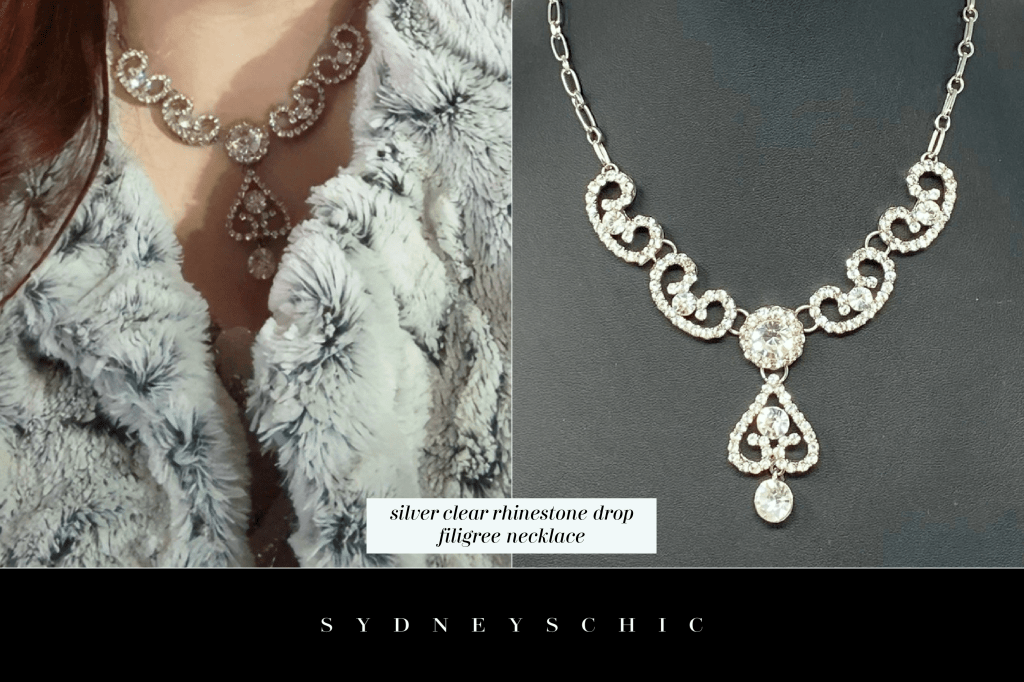
I acquired many necklaces to choose from—as you do—before settling on this one. What I liked about it is that it’s simple and ornate at the same time which is a perfect choice for the regency era that beautifully blends both adjectives into one style. Had the neckline of my dress been more rounded, I would’ve opted for a rounder necklace to match but given the cowling detail of my chosen dress, this dangle accentuated without competing for attention. The necklace was dainty without being too small or boring to be missed around my neck.
It’s important to note that while more Georgian jewelry was made of gold than silver, the later was considered more popular for it’s ability to showcase stones—particularly white or colorless ones such as diamonds—and was favored for more high fashion pieces. They believed in silver’s ability to showcase gemstones in candlelight so strongly that they would often do the reverse of standard jewelry plating today which sees us plate gold over sterling. In the Regency, it was silver that they plated underneath gold. This was taken into consideration when I chose the metal of my sterling silver necklace because give me historical accuracy or give me death!
One feature that the Art Deco, Rococo, and Regency periods all have in common when it comes to their jewelry is the filigree or curvatures of the metal. While these were all seen in different ways as metalworking evolved, the trend of intricacy remains throughout the three. The exact technique of regency jewelers is called Cannetille and was directly inspired by accompanying fabrics worn at the time. Many pieces of regency jewelry aimed to keep the ornateness of the previous Rococo period while refining it to a simpler, more sophisticated style. You can see in my necklace how the curves, swirls, and ultimately dangling heart achieved this goal. I know that pearls are widely associated with Georgians but something about this necklace just felt exemplary when choosing a piece to wear. I suggest that you follow a similar selection process when putting together your own costume. Seek vintage or vintage inspired pieces that meet these criteria to ensure Lady Whistledown doesn’t write something scandalous!
Gloves
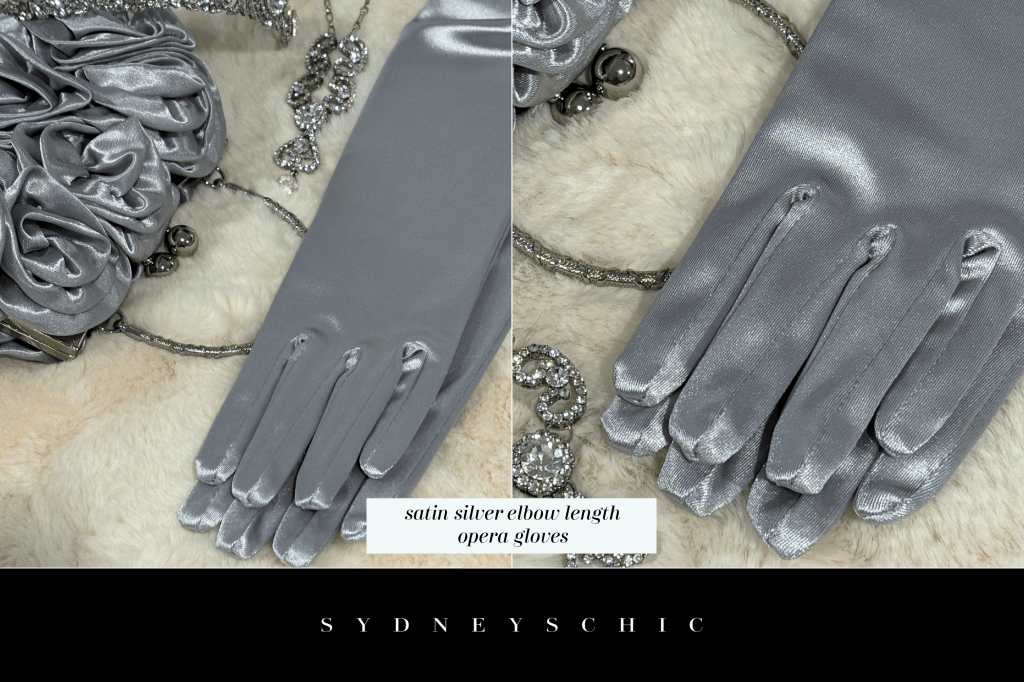
As I mentioned above, I was not leaving the house without my opera gloves. For anyone whose read any of my other evening wear posts, you know that I would be wearing these anyway but they are absolutely essential for any regency costume! In accordance with Georgian tradition wherein ladies alternated between sumptuous, elbow length evening gloves for formal society and lighter, wrist length tea gloves for daytime affairs, gloves are a non negotiable accessory that must be utilized.
The choice of material—whether the buttery sheen of silk for a lavish ballroom, the sturdy yet refined touch of leather for a more daring promenade, or the soft, breathable comfort of cotton for a summer soirée—was dictated by the occasion’s formality and the climate of the day. In my mind, the opera glove is more than a fashion accessory; it is a tactile link to the past, a statement of propriety, and an essential component that transforms a simple dress into a fully realized Regency costume. The length of the gloves that you choose to wear is important and should be based on the time of your event. Keep in mind that Bridgerton is less rigid about this than I am—the show allows for more creative freedom when it comes to styling than true historical authenticity.
In the Regency era a lady’s gloves were far more than a practical accessory; they were a subtle signal of taste and refinement. Most women opted for soft, neutral tones—ivory, white, cream, or beige—because these shades complemented the delicate pastel palettes that dominated their gowns and allowed the hands to appear luminous against the silk or muslin. Gloves were used to not only keep skin clean in gatherings with many people in the age before flu shots but pale meaning that the lighter the glove, the fairer the skin appeared in dim light. Some of these gloves featured things like buttons and embroidery or were scented with the wearer’s favorite fragrance to be smelt when dancing closely with a handsome bachelor.
Yet it was equally fashionable to match the gloves to the lightest hue present in the dress, using the same shade to echo the most understated color of the bodice or skirt. This deliberate coordination pulled the accent color forward, drawing the eye to the most delicate detail of the ensemble, while also adding a whisper of visual depth that prevented the silhouette from looking flat. By choosing gloves that echoed either a neutral palette or the faintest tint of the dress, Regency ladies achieved a harmonious balance between restraint and elegance, turning even a small accessory into a sophisticated display of style.
Given the silver detailing in my dress, I decided on these silver DreamHigh opera gloves to compliment my look. I could’ve worn white—which I thought about—because it goes with anything but I just felt like it was too on the nose and really wanted to emphasis the beadwork of my bodice. I also took this into account when I chose satin due to the fabric’s sheen matching the sparkle of the beads. If I were to style this outfit again, I would still choose silver every time. My event took place in the evening so the gloves that I wore were 21″ long and elbow length in following regency customs.
Tiara
Tiaras were the must have finishing touch for any Regency era lady who wanted to be taken seriously that I was definitely not going to forget! How often do you get to wear a tiara out in public without the rest of the world thinking you’re a lunatic these days, anyway? Unlike the towering crowns of earlier centuries meant to impose, Georgian women favored diminutive, almost coronet like headpieces that echoed the delicate diadems perched on the heads of Greco‑Roman statues.
These accessories were generally rounded, thin like a hairband, and often featured only the faintest points—if they had any at all—nestled at the center, creating a subtle yet unmistakable nod to antiquity while keeping the look elegant enough for a ballroom. This style of tiara is called “bandeaux” and often featured delicate gold or silver bands, filigree, swirls, pearls, cameos, coral, and white stones. Primarily utilized by married women, it wasn’t uncommon to see women of high society wear them regardless of their marital circumstance as tiaras switched from a marriage to a status symbol.
Cameo tiaras were popularized by Empress Joséphine and they were made of carved shell or stone portraits. Tiaras with pearls symbolized purity and were intentionally worn by women seeking to maintain an image of youth and innocence. Floral tiaras were also sought after during this time of “botanomania” when the growing fascination with botany was growing among regency courts. The introduction of florals into the highest levels of society became so entrenched that it only made sense to craft them into wearable flower crowns that would never wilt.
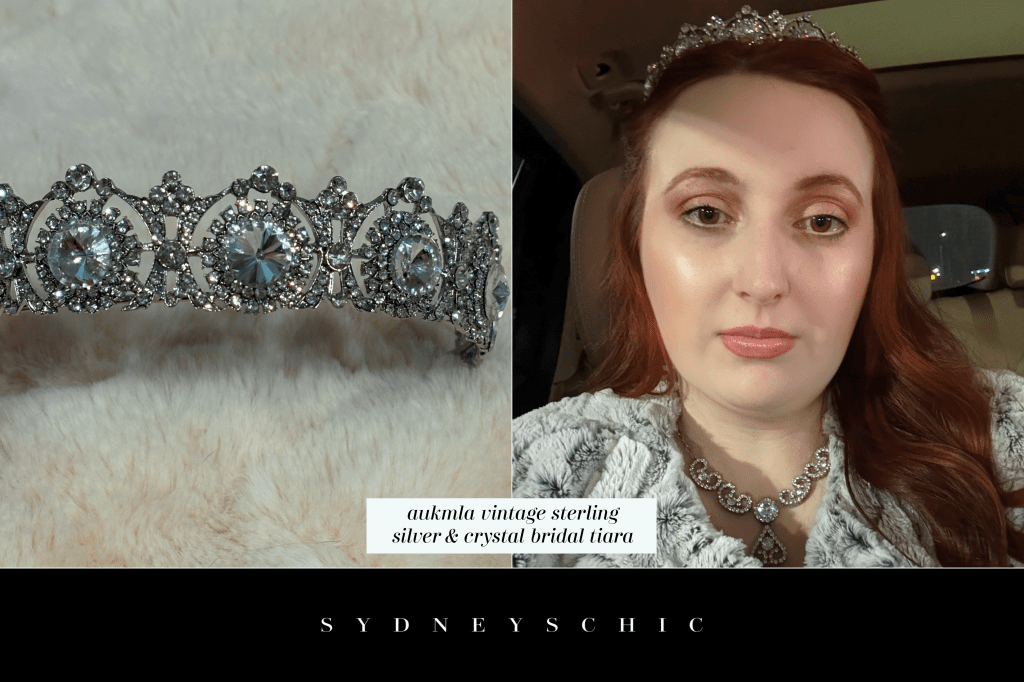
The tiara that I chose is a vintage one by Aukmla. It’s sterling silver and features a low diadem or kokoshnik style profile that fits the regency standard of a lower crown. This tiara features sparkling rhinestones, curved arches, and floral details with shorter, rounded points. I purposefully wanted something that not only had intricate metalwork to match the necklace but would follow the botany or floral theme that I assigned to myself when I first started this look. The tiara matches the rose detailing in my coat as well as my clutch bag.
Coat
Even though the most appropriate Regency coat I could imagine wearing would have been a crisp, waist length Spencer jacket—its sleek cut and buttoned front the very picture of aristocratic poise—I quickly realized that no satisfaction of historical accuracy could keep me from shivering in the middle of a February night. The ball I attended was already a frosty affair and the weather forecast promised nothing short of a blizzard the next day. There was no way that a flimsy bolero jacket was going to stave off influenza in low temperatures such as these.
Knowing that a delicate Spencer would leave me exposed to the unforgiving wind and incoming snow, I made a pragmatic yet still fashionable choice: I slipped into a sumptuous faux fur coat, its plush collar and thick lining offering both the regal silhouette I craved and the insulation necessary to survive the relentless winter that lay in wait beyond the ballroom doors. And yes, before you ask, Georgian women did wear fur coats. Please do not come for me, you can look it up! I have been asked this so many times that I feel like an expert on the topic. Turns out, I did not have to sacrifice historical accuracy at all!
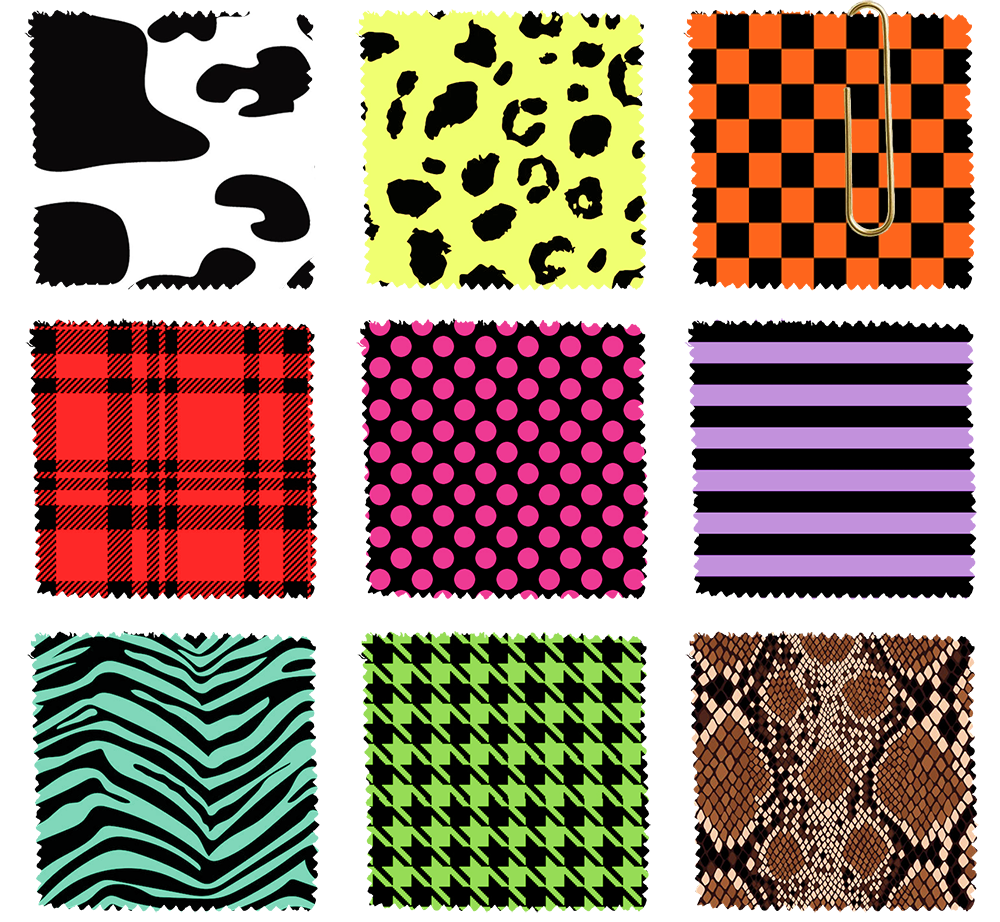
During the regency era, many coats, vests, and even dresses were lined with fur. This included collars, hems, and sleeves. Tippets—fancy thin scarves—were made of fur and so were hats! Now, I’m not saying that you should go out and get yourself a forest full of furs but what I am saying is that for those who either can’t find or fit into the traditional spencer jackets that can run small or uncomfortable for certain body types, a faux fur will be just fine—maybe even a wrap if you’re feeling it. Again, make sure it matches your outfit and stay away from wild prints like leopard or cheetah because they weren’t a thing then but solid furs were. You’re welcome and stay warm!
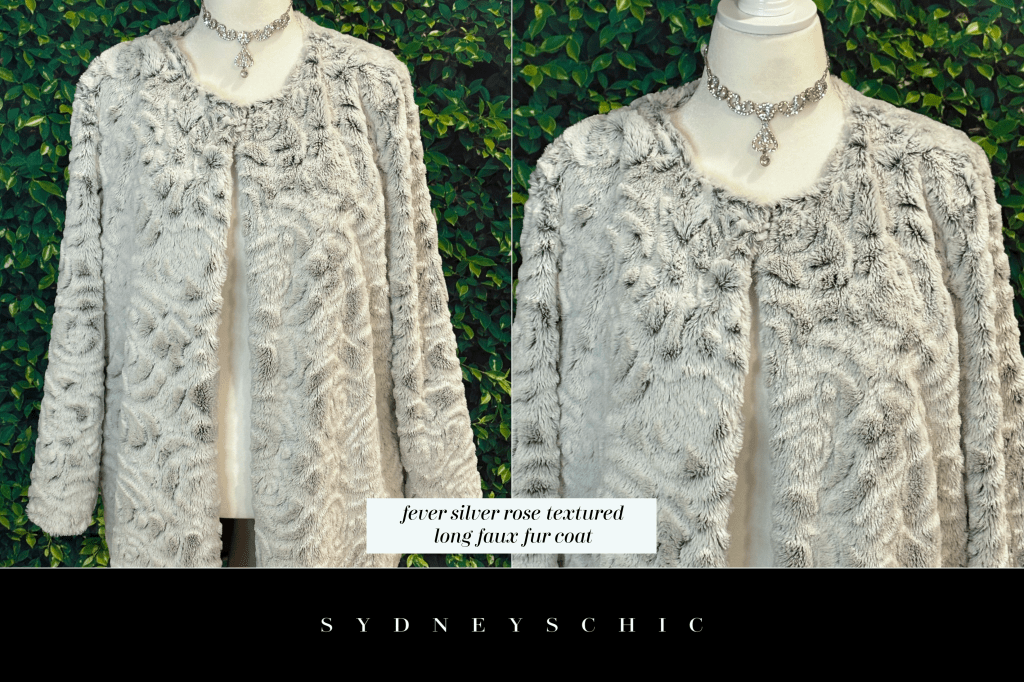
The faux fur coat that I decided on was silver or gray to match the beading of my dress and I wanted something that had regency detailing. I didn’t know quite what I was looking for until I accidentally found this coat by the brand, Fever. It was everything I wanted—warm, faux fur textured, and with unique rose detailing that would compliment the rest of my outfit. Even though it doesn’t have an empire waist silhouette, it has a single button closure that was common during the regency so it was still a win! I was actually picturing a tapestry jacket which would be a good alternative if you’re going to a ball in warmer weather or looking for some more inspiration. Tapestry jackets in general are very on brand with the Regency aesthetic whether you’re shopping menswear or womenswear.
Clutch
Some may find it hard to believe but the regency era didn’t actually have evening clutches like we do today, they carried “reticules”. This was a petite draw string bag that preceded today’s evening clutch by at least a hundred years. Crafted from luxurious fabrics such as silk, velvet or fine linen, each reticule was a miniature work of art, often embroidered, beaded, tasselled, or detailed with intricate needlework designed to echo the color and trim of a pocketless gown.
Their compact dimensions made them perfect for stashing the essentials of a society soirée—coins, a handkerchief, a folding fan, a vial of perfume—while their varied silhouettes—rounded, hexagonal, lozenge‑shaped and, in the latter years of the period, delicately shell‑shaped—added a personal visual cue to the wearer’s ensemble. The fabric of the bag and the gown was often the same. In short, the reticule was the Regency’s elegant, functional forerunner to the contemporary clutch, marrying practicality with the period’s obsession with ornamental detail.
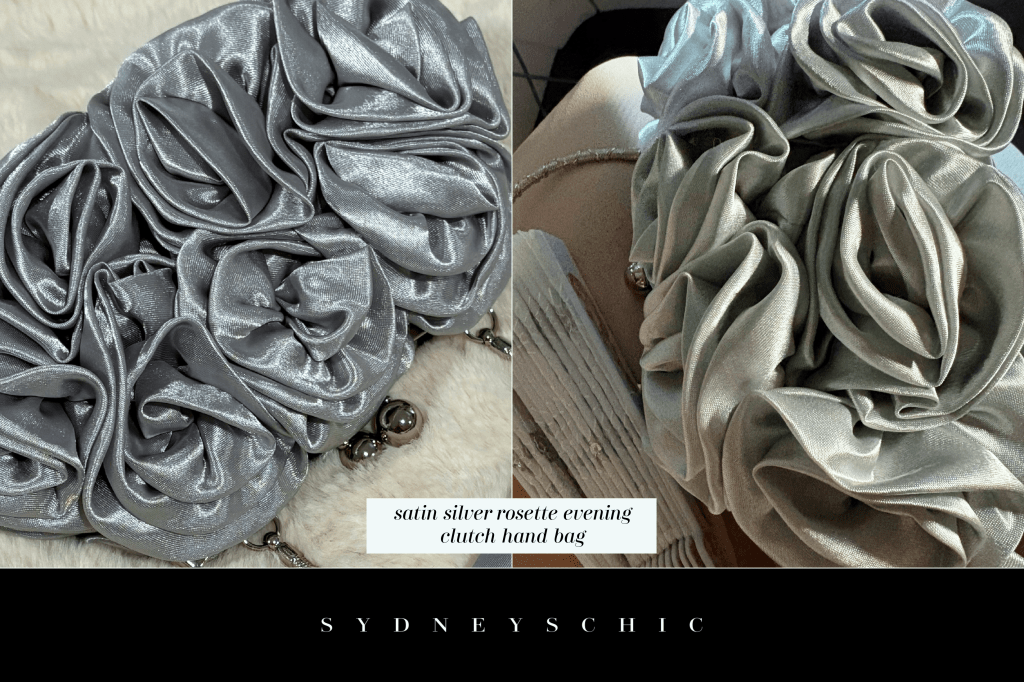
I could not find a Reticule to match my dress nor would it fit an iphone if I had so I settled for a rectangular evening clutch. I wanted it to match the silver details of my jewelry, dress, and coat but I also aimed to find something floral to pull the rest of the outfit together. I kept drawing a blank until I remembered the red rose handbag from last year’s gala look and decided to see if it came in silver. To my luck, it sure did! I purchased this SilTriangle bag from Amazon for $19.99. The bag is silver or gray and features large rosettes all over the structured bag with sterling hardware. Not only is it durable with an extra chain but it does indeed fit many things inside!
While it’s not exactly “historically accurate” , the ornateness, unique fabric detailing, and floral touches make it a perfect regency bag regardless! Women of high society would’ve applauded the ingenuity and skill it appears to have taken to create such a bag. I have no doubt that Georgian women would’ve gone wild for it and I would’ve been the talk of the ton!
Conclusion
It was so much fun piecing this ensemble together—even if the process felt a little nerve wracking at times. I’m constantly juggling two passions: statement style and meticulous historical accuracy. Navigating that tightrope can be tricky, as even a seemingly minor detail (the cut of a sleeve or the exact shade of a fabric) can tip the balance from “period‑correct” to “fashion‑forward,” but the challenge only made the final reveal all the sweeter when it was done.
If you’re wondering why I did not share my shoes here, it’s because it was the middle of winter and your girl wore boots. Since my skirt was long, I am not ashamed to admit that I wore silver gogo boots because they were the only pair I had that would give me the heel height I needed for the dress and the traction I needed to not slip on the ice. Don’t you judge me—we don’t do that here! If I’d had my choice, I would’ve worn ballet flats or something but it just wasn’t going to happen with the length of this gown. The footwear was the only thing that I was a tad disappointed in but I didn’t fall and no one saw! If you’re also confused as to why some items were linked while others weren’t, it’s because some of the items were one of a kind. I did link what was still available.
In the end, the look turned out exactly how I imagined—an elegant homage that feels both authentic and runway ready—and I can’t wait to see how it sparks ideas for your own costume creations. Please remember to do your own research especially when it concerns historical events, people, or periods. I don’t think it’s mentioned enough and I know that there are many costume manufacturers that couldn’t care less but please be diligent. Not only does it help you improve your costume but you learn some amazing things you might not have learned anywhere else!
If you like this type of content, let me know as it feels like a step up from our usual haute history posts that just talk about fashion history rather than styling an outfit. Stay sophisticated and stay dazzling, diamonds of the ton!

make sure you subscribe & follow to be notified of new content
©sydneyschic ┊image credit: sydneyschic ┊unsponsored post






 Sydney's Chic.
Leave a reply to magnificentcupcakef9379f0674 Cancel reply